By Julianne Muszynski, Vice President, and Pattie Sullivan, Senior Vice President, B2B Practice Head, North America
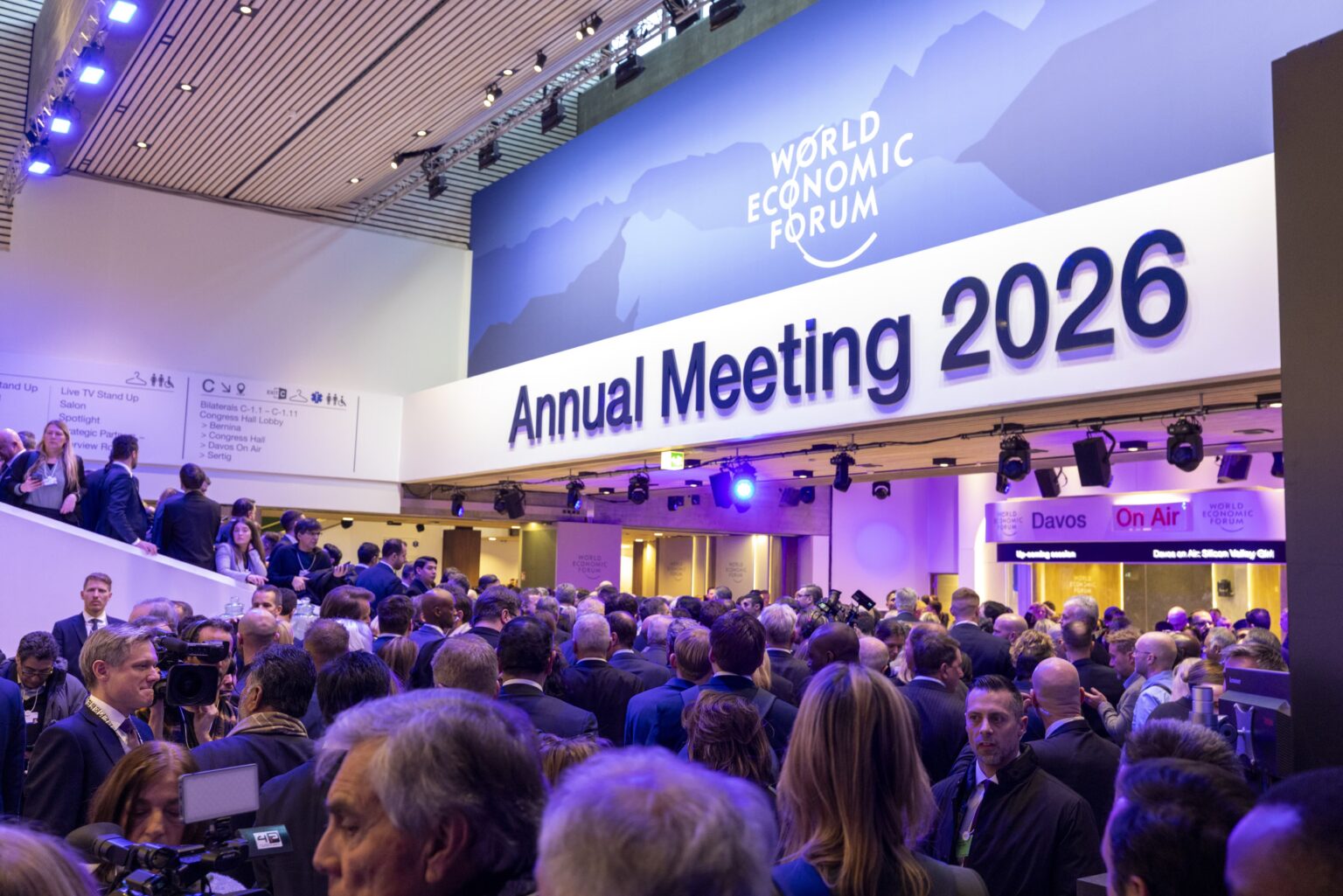
This year, something significant happened: The narratives emerging from CES and the World Economic Forum (WEF) aligned more clearly than ever before.
Together, they offered a unified view of the technology, risks and structural shifts that will define how industrial companies innovate, operate and compete globally over the next decade.
For years, CES has been synonymous with consumer electronics. Think giant TVs, smart home gadgets and futuristic personal tech.
But at CES 2026, a historic shift occurred. Industrial innovation made headlines, with a focus on AI designed for physical environments — factory floors, warehouses, worksites and critical infrastructure. This wasn’t “AI as a feature.” It was AI as an operational backbone — the type of AI that directly improves throughput, safety, quality and labor productivity inside physical operations. In fact, for the first time, CES launched a Future of Manufacturing track, a signal that industrial technology is no longer a side conversation but a major contributor to national productivity, competitiveness and economic growth.
Manufacturing, supply chain technology and industrial software are no longer niche conversations confined to trade publications, engineering conferences or specialized industrial analyst circles. They are now considered critical pillars of global tech advancement. For industrial brands, this unlocks a powerful reframing, taking them from behind-the-scenes operators to visible leaders of the next technological era.
Another major theme pertained to digital intelligence, specifically AI and real-time analytics, moving closer to the machine. Industrial IoT has evolved from simple sensing into real-time, secure, AI-ready edge ecosystems. This matters because factory lines, safety systems and robotics can’t afford cloud latency. Decisions must happen instantly. As edge computing becomes standard, industrial companies can:
The result is a more resilient, data-rich operational environment.
While CES was a celebration of possibility, the conversations at WEF delivered a grounded reminder of the world in which these technologies must operate.
WEF 2026 made it clear that geoeconomic confrontation, trade weaponization, shifting alliances and regulatory tightening now shape day-to-day business decisions for multinational industrials. For organizations with complex global footprints, volatility is the environment in which they must build resilience.
One of the places we’re seeing that play out is in global supply chains. For decades, these supply chains were optimized for cost. That equation has changed. Tariffs, geopolitical tensions and shifting industrial policy are forcing companies to rethink where they build, source and distribute. Resilience and multi-region footprints are becoming strategic imperatives, as are diversified sourcing and redundancy — meaning backup suppliers, alternative manufacturing sites and duplicate logistics pathways that prevent single points of failure.
This dovetails with the trends at CES. You cannot deploy advanced automation or AI-led production if your supply chain isn’t designed to withstand volatility.
While CES highlighted AI’s possibilities, WEF spotlighted its constraints:
Industrial companies are realizing that scaling AI requires not just technology adoption but energy strategy, policy alignment and infrastructure investment. In other words, you can’t transform operations without transforming the systems that support them.
Put simply: CES showcased what industrial technology can now do. WEF underscored the geopolitical and operational realities that determine whether those technologies can scale.
Taken together, CES and WEF send clear signals:
Together, CES and WEF create a roadmap for the next era of industrial competitiveness: one defined by AI-native operations, diversified and resilient supply chains, geopolitical awareness and infrastructure strategy.
For those of us advising industrial and B2B organizations on communications and marketing, the opportunity is enormous: help companies not just adopt new technologies but articulate a future-ready vision that integrates innovation with real-world constraints.
And as this year made clear, integration is where true competitive advantage will emerge.
Take the next step and reach out today.